Free Wood

In the past few years I have been very lucky in that numerous friends and acquaintances have given me free wood for use in woodturning. The assortment of wood has ranged from pear, black walnut, apple, live oak logs and even some large maple burls. This blog is going to be two fold. The first portion will be concerned with my attempts to properly dry the wood. The second part will be various ideas I have come up with in an attempt to pay these people back for their generosity.

You could share some of the newly acquired wood with your woodturning friends. This has the possibility of different people seeing different ‘things’ in similar pieces of wood. By sharing your bounty with your friends hopefully these friends would share any woods they acquire with you. When you are given a whole trees worth of wood this can become a major undertaking so this is an opportune time to share.

Any time you cut a piece of wood, the moisture in the log will attempt to stabilize to your ambient humidity level. This typically causes the end checking or splits on a log. If you are going to turn the wood while it is green then you will need to turn the wood as soon as possible.

If you want to turn dry wood then you will need to do a few things to ensure your new treasure does not become just so much fire wood. The first thing I do is use a broad tipped permanent marker to write the type of wood and the date on the end of the logs. The next thing is to seal the ends of the wood with a sealant similar to End-Coat. If you use a latex paint to seal the end of the logs you will need to put the type of wood and date on the logs after the paint is dried. Once the sealant and labeling is dry then the logs will need to be stacked and covered loosely or stacked in a drying shed. The main objective is to allow the air circulating around the logs to slowly dry out the moisture contained within the logs. When drying logs it can take a few years before the wood is stabilized.

Some people rough out their turning blanks from the green wood to approximately 1 inch thickness. This method works well if you are turning bowls. Trying to turn a spindle using green wood is not feasible unless you are trying for a corkscrew appearance. There are many quick drying methods but as I have not bothered with attempting to speed up the drying process I can not recommend any of the methods. If you use a microwave oven or normal stove oven in your attempt to dry wood, make sure you do not use the appliances in your kitchen. The moisture / scent given off by the wood drying can permanently give the oven an offensive odor.

The friends that give you the wood may say they just want to get rid of the wood but by turning something using ‘their’ wood and giving a turned article to them as a gift you can be sure they will keep you in mind if they ever have any other wood to give away. You do not have to turn a museum quality piece but try to make the article show your best effort.

Two years ago I was the happy recipient of wood from a very large pear tree. I started turning miniature birdhouses this past summer and decided a bird house ornament would show my appreciation for the wood.

Another friend gave me some black walnut logs. This was paid back by turning a pen using the black walnut.

Yet another friend gave me the majority of the logs from a very old apple tree he had cut down on his property. This was paid back with a pen using his apple wood.

A friend who gave me a few live oak logs was given wooden handles for her crochet needles.
Wood Lathe Maintenance

As this blog is for informational purposes, I assume no responsibility for operator safety.

Fall and spring are prime times for moisture buildup on the surface of cold metal tools so this blog will hopefully help you prevent rust and assist you in cleaning and maintaining your lathe. There are many manufacturers and models of lathes so I will attempt to keep my information applicable to most if not all types of lathes. Maintenance of the lathe is not complicated and does not require very many items. The items I typically use are listed at the end of this blog. A few of the books that mention lathe maintenance are also listed at the end of this blog. A pictorial of a lathe and the names of various parts is at the end of this blog

The very first thing you need to do before you attempt to perform any maintenance on your lathe is to secure the power. By this I mean you should either unplug the lathe or if the lathe is hard wired to a breaker panel then turn off the breaker.

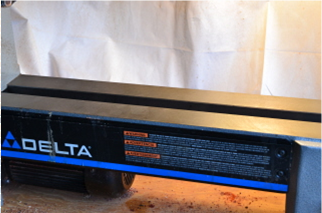
dirty lathe 1

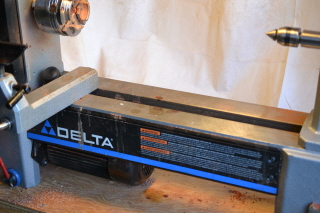
The next thing is to remove the tailstock and banjo to give you access to the lathe bed. Place these items in a safe location as they are typically made of cast metal and do not take to bouncing off of a hard surface like a concrete floor. You can then scrub and lubricate the bed with a combination of 0000 steel wool and WD-40. By using the steel wool it will remove any finishing materials that may have possibly dripped onto the bed as you were applying finish to a project. Major lumps of finishing materials can typically be removed by using something similar to a single edge razor blade scraper. The WD-40 will help float away any rust film. By wearing either latex or nitrile gloves you will avoid contact with the WD-40 and your hands will not smell of the WD-40 when you are finished cleaning and lubricating your lathe. The inside of the bed (also called ways) should be scrubbed at this time to allow the tailstock and the banjo to slide easier. Once the surface of the bed is relatively shiny you can wipe the bed with a clean cloth to remove any junk loosened during the scrubbing. At this time check the underside of the banjo and the tailstock to ensure there is no rust or crud buildup. While you have the 0000 steel wool and WD-40 handy give these two items a fast scrub where they contact the bed. Wipe the underside of the banjo and tailstock with the rag to remove the excess oil. Remember that oil soaked cloth is combustible so dispose of the rag either into a lidded metal safety can or air it outside to dry.

clean lathe 2

Once the bed, ways, banjo, and tailstock are cleaned then a dry silicone spray can be applied. It should be noted that WD-40 is actually a water dispersant and not a rust inhibitor. The CAA has banned the use of WD-40 in all aircraft maintenance facilities. It seems that once WD-40 has dried it actually attract moisture / water and therefore rust / corrosion. This information was shown in the November 2014 issue of Woodturning (www.woodworkersinstitute.com).

While you have the tailstock and banjo off of the lathe you will have better access to the drive motor on the lathes that have the motor under the bed. At this time you can give the vents on the motor short blasts of air to dislodge any accumulated dust and wood chips. This will help the motor to run cooler and also extend its life. You should do a check of the drive belt or belts if your lathe is so equipped to look for cracks or other issues and replace the belt if necessary.

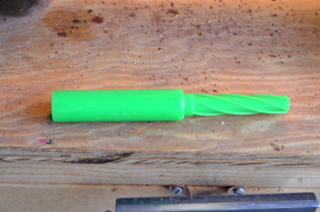
While the tailstock is off of the lathe feel the groove that the quill lock rides in. If there is a burr then a light touch with a file will remove the burr. The burr is typically caused by using a Jacobs’s chuck in the tail stock to drill pen blanks or other drilling operations as this causes a twisting action. Remount the banjo on the lathe bed and then remount the tailstock. To clean the Morse taper in the tailstock and also in the headstock there is a tool called a “Green Weenie” that is inserted into the Morse taper and turned by hand (with the lathe turned off). The Green Weenie is made of synthetic material and will not affect the Morse taper.

green weenie 3

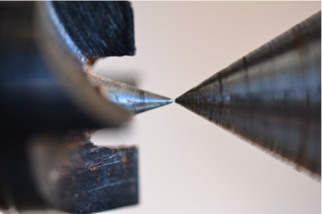
Putting a spur drive in the headstock and a cone center in the tail stock and bringing their points almost touching each other will allow you to see if the headstock and tailstock are in alignment. If the points do not align with each other then you will need to adjust the headstock per your owner’s manual. Misalignment of the headstock and the tailstock is potentially dangerous and will at the very least have a negative effect on the quality of your tuning.

alignment 4

The next thing to check on your lathe is the upper edge of your tool rest for any dings or dents. If there are any dings or dents these will have an unwanted effect on your turning as your tools will catch as they slide along the tool rest. The easiest way to remove the dings and dents is with a single cut mill bastard file. Just lock the tool rest in the banjo and stroke the file across the tool rest until the dents are removed. To safest way to prevent filing too much in one area is to draw the file from one end to the other on the tool rest with the file resting along the tool rest. With the tool rest removed from the banjo you can inspect the post for dings and dents caused by the tool rest lock. If there are any raised areas on the tool rest post use the file and gently remove the raised areas. The vertical post that fits into the banjo should be free of any rust and crud buildup. If there is any of either on the post then scrub the post with 0000 steel wool and WD-40. This is a good time to perform similar service to any spare tool rests you might have. You should also do a check of the mounting hole in the banjo for rust or crud and clean if required. You can spray a light coating of a dry silicone spray to the vertical post of the tool rest.

If your lathe has any wiggle due to any of its legs not making full contact on the floor or bench you should either shim or adjust the leveling posts if so equipped.

The last thing for you to check before turning ON your lathe is the condition of the power cord. If there are any cracks in the insulation or the plug is damaged in any way then you will need to replace the cord and/or the connector or have a qualified electrician do this.

Items potentially needed;
WD-40
0000 Steel Wool
Spur Drive
Cone Center
Dry Silicone Spray
Single Cut Mill Bastard File
Green Weenie
Gloves, Latex or Nitrile

Reference material;
The Frugal Woodturner (Ernie Conover)
Lathe, The Missing Shop Manual
Woodturning (November 2014)
Owners manual for your lathe

lathe parts 5